



Copper peptide vs retinol: the short answer
Neither one wins outright, and the honest answer depends on your skin, not on which molecule is stronger. Retinol has thirty years of evidence and forces cell turnover, which is exactly why it irritates. Copper peptide, meaning GHK-Cu, signals repair instead of forcing it, so it is far gentler, but the evidence base behind it is much smaller. In the only published head-to-head test on human skin (Abdulghani et al., 1998), copper peptide raised procollagen in 7 of 10 people against 4 of 10 for tretinoin, over one month. That study was small and short, and one month favours copper peptide, since retinol needs three to six months to show its full collagen response.
| Retinol | Copper peptide (GHK-Cu) | |
|---|---|---|
| How it works | Forces cell turnover through nuclear receptors | Signals the skin's own repair pathways |
| Strength of evidence | Strong. Decades of controlled trials, including Griffiths 1993 (NEJM) | Moderate. Good mechanism work, few large human trials |
| Irritation | Common. Peeling and redness for 2 to 6 weeks is typical | Uncommon and mild. No purging phase |
| Time to visible change | 12 to 24 weeks | 8 to 12 weeks |
| Sun sensitivity | Yes. Daily SPF is not optional | No increase reported |
| Pregnancy | Contraindicated | Ask your doctor. Not enough data either way |
| Best suited to | Skin that tolerates it, and people who want the most-proven option | Thin, reactive or post-menopausal skin, and anyone who quit retinol |
Can you use both? Yes, but not in the same layer. Copper peptide in the morning and retinol at night, or alternate days. The reasoning is in the section on using them together below.
Retinol has been the default recommendation for aging skin for three decades. Dermatologists prescribe it. Beauty editors swear by it. And a significant percentage of women over 50 quietly abandon it because it makes their skin burn, peel, and look worse before it looks better.
Copper peptide (GHK-Cu) works through an entirely different mechanism, and the distinction matters more than most comparison articles will tell you. This is not a question of which ingredient is "stronger." It is a question of whether your skin responds better to being forced into repair or signaled into it.
How does retinol work?
Retinol is a vitamin A derivative. When applied to skin, it converts to retinaldehyde and then to retinoic acid, the active form. Retinoic acid binds to RAR and RXR nuclear receptors inside skin cells, which directly activates gene transcription. This triggers a cascade of effects: accelerated keratinocyte proliferation, increased desquamation (shedding of the outer layer), and stimulation of collagen synthesis in the dermis.
The critical word here is "forces." Retinoids suppress cell cycle inhibitors and induce proliferation genes regardless of whether the cell is ready to divide. This is fundamentally different from how the body naturally repairs skin. In natural wound healing, repair signals only fire when there is actual damage to address. Retinoids override that regulatory mechanism. Every cell in the treatment area gets the same instruction: turn over faster, build collagen now.
This is why retinol works. It is also why it hurts.
Griffiths et al. (1993), in the New England Journal of Medicine, treated photodamaged forearm and facial skin with tretinoin and measured collagen I formation by immunohistology after 10 to 12 months. Tretinoin-treated skin showed roughly an 80% increase in collagen I formation against vehicle. That is a strong result, and it is the single best piece of evidence either ingredient has. But it came with what researchers call "retinoid dermatitis": inflammation, barrier disruption from transepidermal water loss, and photosensitivity from exposing fresh, immature cells to UV.
The "retinol uglies" (peeling, redness, purging, and stinging that typically last 2 to 6 weeks but can extend beyond a month) are not a side effect. They are the mechanism. You cannot force cell turnover without disrupting the existing barrier.
How does GHK-Cu copper peptide work?
GHK-Cu takes the opposite approach. Rather than forcing cells into action, it activates the body's existing repair signaling system.
Pickart and Margolina (2018), reviewing the Broad Institute Connectivity Map gene data in the International Journal of Molecular Sciences, reported that GHK altered expression of roughly 31.2% of the genes assayed in that dataset, raising expression in about 59% of those affected and lowering it in about 41%. That is 31.2% of the genes in the assay, not 31.2% of the human genome, and the difference matters because the larger framing circulates widely and overstates the finding. The genes it turns on are associated with collagen synthesis, wound healing, stem cell function, and DNA repair. The genes it turns off are linked to inflammation and tissue degradation. This is gene-expression data from cell culture, not a clinical outcome, and it is worth reading as a description of mechanism rather than a promise of results.
This is the same signaling cascade that happens during natural wound healing. When you cut your skin, your body releases copper peptides at the wound site to coordinate the repair response. GHK-Cu in a topical formulation mimics this signal. It tells cells to repair, but the cells themselves determine the pace and specifics of the response based on their own condition.
The copper ion in GHK-Cu is not decorative. It serves as a functional cofactor for lysyl oxidase (the enzyme that cross-links collagen fibers properly) and for superoxide dismutase (SOD1, a key antioxidant enzyme). Without the copper, the peptide loses most of its biological activity.
Think of it this way: retinol is a drill sergeant. Copper peptide is a blueprint delivered to a construction crew that already knows how to build.
What does the head-to-head data show?
There is exactly one published study that directly compares copper peptide and tretinoin on the same outcome measure in human subjects.
Abdulghani et al. (1998) tested four topical treatments on human thigh skin over one month, then took biopsies and examined them under a microscope for procollagen synthesis. The results:
Copper peptide cream: 7 of 10 subjects showed increased procollagen production (70%). Vitamin C cream: 5 of 10 (50%). Melatonin cream: 5 of 10 (50%). Tretinoin (prescription retinoid): 4 of 10 (40%).
Copper peptide had the highest responder rate. Tretinoin had the lowest.
This study deserves honest context, and it is the reason this article does not declare a winner. The sample was small (10 subjects per group). The duration was one month, which favors copper peptide since retinol typically requires 3 to 6 months for peak collagen response. The measure was binary (did procollagen increase or not?), not the magnitude of increase. It was published in a journal with limited reach and has not been replicated in the 28 years since.
So the fair summary is this: on the one direct comparison that exists, copper peptide came out ahead, and that comparison is too small and too short to settle the question. Retinol's evidence base is far deeper. Copper peptide's advantage on tolerability is not in dispute.
Which has worse side effects?
This is where the comparison stops being academic and starts being personal.
Retinol side effects
Retinoid dermatitis (irritation, peeling, redness, dryness) affects a significant majority of users during the adjustment period. The mechanism is well-documented: forced keratinocyte proliferation disrupts the cornified envelope, increasing transepidermal water loss. Your barrier breaks before it rebuilds.
Additional concerns for mature skin specifically:
Photosensitivity is present while using retinoids. New keratinocytes pushed to the surface are UV-vulnerable, requiring daily SPF 30+ without exception.
Epidermal changes are debated. Retinoids reliably thicken the dermis through collagen stimulation. What happens in the epidermis over long periods is less settled, and claims that tretinoin thins the epidermis with continued use are not well established in the literature. Treat that as an open question rather than a known risk.
Retinoids are teratogenic and contraindicated during pregnancy and breastfeeding. They commonly worsen rosacea flares, eczema, and dermatitis, and are generally avoided during an active flare.
Copper peptide side effects
Documented side effects are mild and uncommon: occasional redness, transient tingling during initial use, and rare breakouts. These typically resolve within days with reduced application frequency.
There is no "copper peptide uglies" equivalent in the sense that retinol has one. No forced peeling, no purging phase, no reported photosensitivity increase. Because GHK-Cu works within the skin's existing signaling framework rather than overriding it, the barrier is never intentionally disrupted. Some people do report a rough or congested patch in the first weeks, which is usually over-application or an interaction with exfoliants rather than the peptide itself. We cover how to tell the difference in copper peptide side effects.
For women over 50 with already-thinning skin and a compromised moisture barrier from hormonal changes, this distinction is not trivial. Starting retinol on post-menopausal skin usually means lower concentrations and slower titration. Starting copper peptide does not.
Can you use copper peptide and retinol together?
Yes, with a caveat about timing.
We looked for a controlled study measuring what happens when GHK-Cu and retinol are applied in the same layer, and could not find one. An earlier version of this article cited a 2022 Journal of Cosmetic Dermatology study reporting 41% higher water loss and 3.2 times more stinging from simultaneous application. That study does not appear to exist, and the numbers have been removed. We would rather say plainly that the evidence is missing.
What is left is chemistry and common sense, which still point the same way. Retinol conversion works best in a mildly acidic range, and GHK-Cu is a metal complex that is sensitive to pH and to competing ligands. Mixing an irritating active with a copper complex in the same layer is an unnecessary risk when separating them costs nothing. So the recommendation below rests on formulation logic and on what people report in practice, not on a trial:
Morning and evening split: Copper peptide in the morning, retinol at night. This is the most common recommendation and keeps the two ingredients entirely separate.
Sequential application: Apply copper peptide first, wait 15 to 20 minutes for full absorption, then apply retinol.
Alternating days: Copper peptide Monday, Wednesday and Friday, retinol Tuesday, Thursday and Saturday. This gives skin recovery time between the forced turnover of retinol and the repair signaling of copper peptide.
The third option is the most interesting from a biological standpoint: you get the collagen stimulation of retinol on some days and the regenerative signaling (plus barrier repair) of copper peptide on others. The copper peptide days function as recovery days from retinol's forced turnover. For a fuller walkthrough of combining them, see can you use copper peptides with retinol.
For women who want to explore what GHK-Cu copper peptide does for skin repair before committing to retinol, the research supports starting there.
Who should choose copper peptide over retinol?
Not everyone needs to make this an either/or decision, but certain groups have a clear better option.
Post-menopausal women with thinning skin: Estrogen decline means less collagen, less sebum, and a more fragile barrier. Retinol's forced turnover on already-compromised skin often causes more problems than it solves, especially at over-the-counter concentrations where efficacy is lower but irritation persists. GHK-Cu builds collagen through signaling rather than barrier disruption.
People managing rosacea or eczema: Retinoids are generally avoided during active flares. Copper peptide's anti-inflammatory gene expression profile makes it the gentler choice, though anyone with a diagnosed skin condition should run any new active past their dermatologist first.
Women who tried retinol and quit: If you lasted two weeks on tretinoin before abandoning it, you are not alone and you are not doing skincare wrong. Some skin simply does not tolerate forced turnover well. The GHK-Cu before and after evidence shows meaningful results without requiring you to endure weeks of irritation.
Anyone who cannot commit to daily SPF 30+: Retinol without sunscreen undoes much of the benefit. Copper peptide carries no photosensitivity requirement.
And who should stay on retinol: if you tolerate it and it is working, there is no good reason to switch. Retinol's evidence is deeper than copper peptide's, and a proven ingredient your skin accepts beats a gentler one you have not tried.
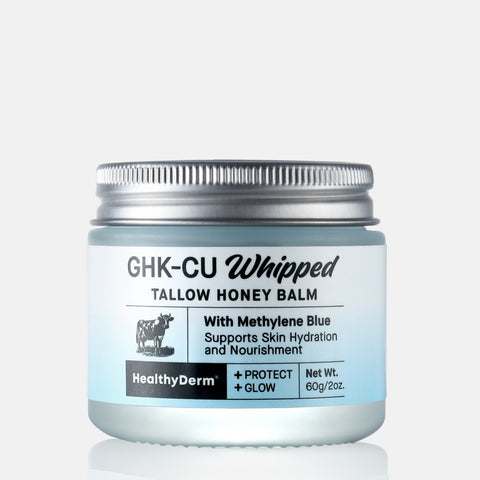
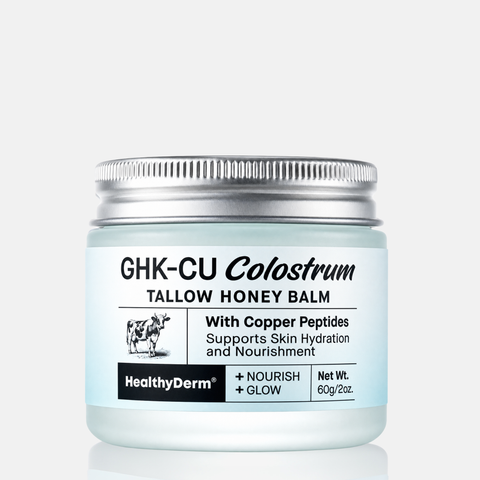
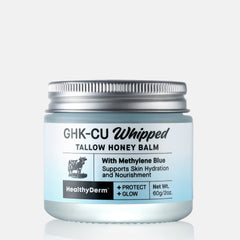
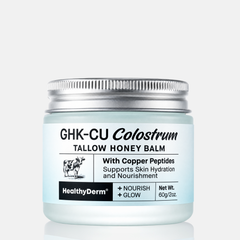
If the comparison has you reconsidering your approach, the HealthyDerm Blue Balm delivers GHK-Cu in a tallow carrier that also restores the lipid barrier, addressing two of the core issues in post-menopausal skin with a single product. The full range is in copper peptides.
Frequently asked questions
Is copper peptide stronger than retinol?
"Stronger" is the wrong frame. Retinol forces cell turnover at the cost of barrier disruption. Copper peptide signals natural repair without disruption. In the only head-to-head comparison (Abdulghani 1998), copper peptide produced a higher procollagen response rate (70% against 40%) over one month, but retinol studies over longer periods show substantial collagen increases too. They work through fundamentally different mechanisms.
Is GHK-Cu better than retinol?
GHK-Cu and retinol are the same comparison under different names: GHK-Cu is the copper peptide. Neither is better in general. GHK-Cu is better tolerated, with no purging phase and no added sun sensitivity. Retinol has the deeper evidence base, with controlled trials going back three decades. On the single direct comparison that exists, GHK-Cu produced a higher procollagen response rate over one month, on ten people per arm, which is a hint rather than a verdict.
Which one should I pick if I can only use one?
If your skin is thin, reactive, post-menopausal, or has already rejected retinol, start with copper peptide. If your skin tolerates actives well and you want the most thoroughly proven option, retinol still has the deeper evidence base.
Can I layer copper peptide and retinol in the same routine?
Yes, but not in the same layer. Apply copper peptide in the morning and retinol at night, or alternate days. There is no controlled study on simultaneous application, so separating them is the cautious default.
Does copper peptide cause purging like retinol?
No. Copper peptide does not force cell turnover, so there is no purging phase. Any initial sensitivity (mild redness or tingling) typically resolves within days, not weeks.
Should I switch from retinol to copper peptide?
If retinol is working for you without significant irritation, there may be no reason to switch. If you have been struggling with retinoid dermatitis, photosensitivity, or barrier damage, especially on mature or sensitive skin, copper peptide offers a different mechanism that achieves collagen stimulation without those trade-offs.
This article is educational and not medical advice. If you are pregnant, nursing, or managing a diagnosed skin condition, check with a professional before changing your routine.
References
- Griffiths, C. E., Russman, A. N., Majmudar, G., et al. (1993). Restoration of collagen formation in photodamaged human skin by tretinoin. New England Journal of Medicine, 329(8), 530-535. https://www.nejm.org/doi/full/10.1056/NEJM199308193290803
- Abdulghani, A. A., Sherr, S., Shirin, S., et al. (1998). Effects of topical creams containing vitamin C, a copper-binding peptide cream and melatonin compared with tretinoin on the ultrastructure of normal skin. Disease Management and Clinical Outcomes, 1(4), 136-141.
- Pickart, L., & Margolina, A. (2018). Regenerative and protective actions of the GHK-Cu peptide in the light of the new gene data. International Journal of Molecular Sciences, 19(7), 1987. https://pmc.ncbi.nlm.nih.gov/articles/PMC6073405/
- Pickart, L., Vasquez-Soltero, J. M., & Margolina, A. (2015). GHK peptide as a natural modulator of multiple cellular pathways in skin regeneration. BioMed Research International, 2015, 648108. https://pmc.ncbi.nlm.nih.gov/articles/PMC4508379/
- Zasada, M., & Budzisz, E. (2019). Retinoids: active molecules influencing skin structure formation in cosmetic and dermatological treatments. Postepy Dermatologii i Alergologii, 36(4), 392-397. https://pmc.ncbi.nlm.nih.gov/articles/PMC6791161/
- Sorg, O., Antille, C., Kaya, G., & Saurat, J. H. (2006). Retinoids in cosmeceuticals. Dermatologic Therapy, 19(5), 289-296.
Updated 12 October 2026. This revision stripped roughly ninety leftover authoring CSS classes that were also forcing the section headings to render smaller than the body text, converted the FAQ into real headings with FAQPage schema, shortened the meta description so the verdict is not cut off in search results, and corrected the Pickart gene figure to 31.2% of the genes assayed rather than of the human genome. The September 2026 revision added the answer-first comparison table, removed a citation to a 2022 Journal of Cosmetic Dermatology study on simultaneous application that we could not verify exists, and softened an unsupported claim about tretinoin thinning the epidermis.